
Money and everyday finance
Bills, change, budgets, wages and simple interest

Money maths is the maths you will use every single week: shopping, saving, wages and bills.
Money skills
- Always write money with two decimal places: £3.50, not £3.5.
- 100p = £1. Convert to the same unit before adding: £2 + 45p = £2.45.
- Change = money given − cost.
- Simple interest = amount × rate × years. £200 at 3% for 2 years = 200 × 0.03 × 2 = £12.
- VAT in the UK is usually 20%.
Worked examples
Example 1. Tayo buys a sandwich for £2.85 and a drink for £1.40. He pays with a £10 note. How much change?
Example 2. A Saturday job pays £8.60 an hour. How much for 6 hours?
Example 3. £500 is saved at 4% simple interest per year. How much interest after 3 years?
Top tips and common mistakes
- Count up to find change: from £4.25 to £5 is 75p, then to £10 is £5, so £5.75.
- Compare deals by working out the cost of one item.
- A budget = money in − money out. If it is negative you are overspending.

I keep a little budget for my pocket money. Maths helps me save for the things I really want!
Practise
Answer as many as you like. Every question is new, and you get a “correct” tick for each one you get right first time. Use “Show answer” to see a worked solution.
Quiz: earn your stamp
Printable worksheet
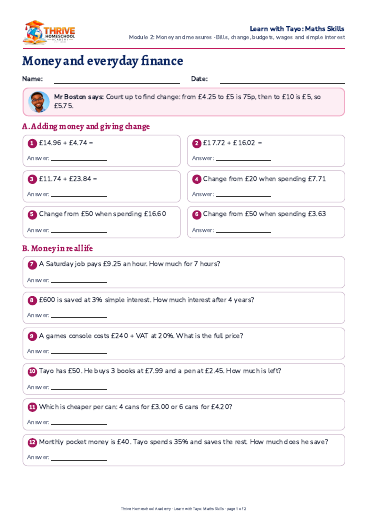
Money and everyday finance worksheet. The questions come first and the answers for grown-ups are on the last page, so you can print just the question pages.
Printing is optional. A4 size.